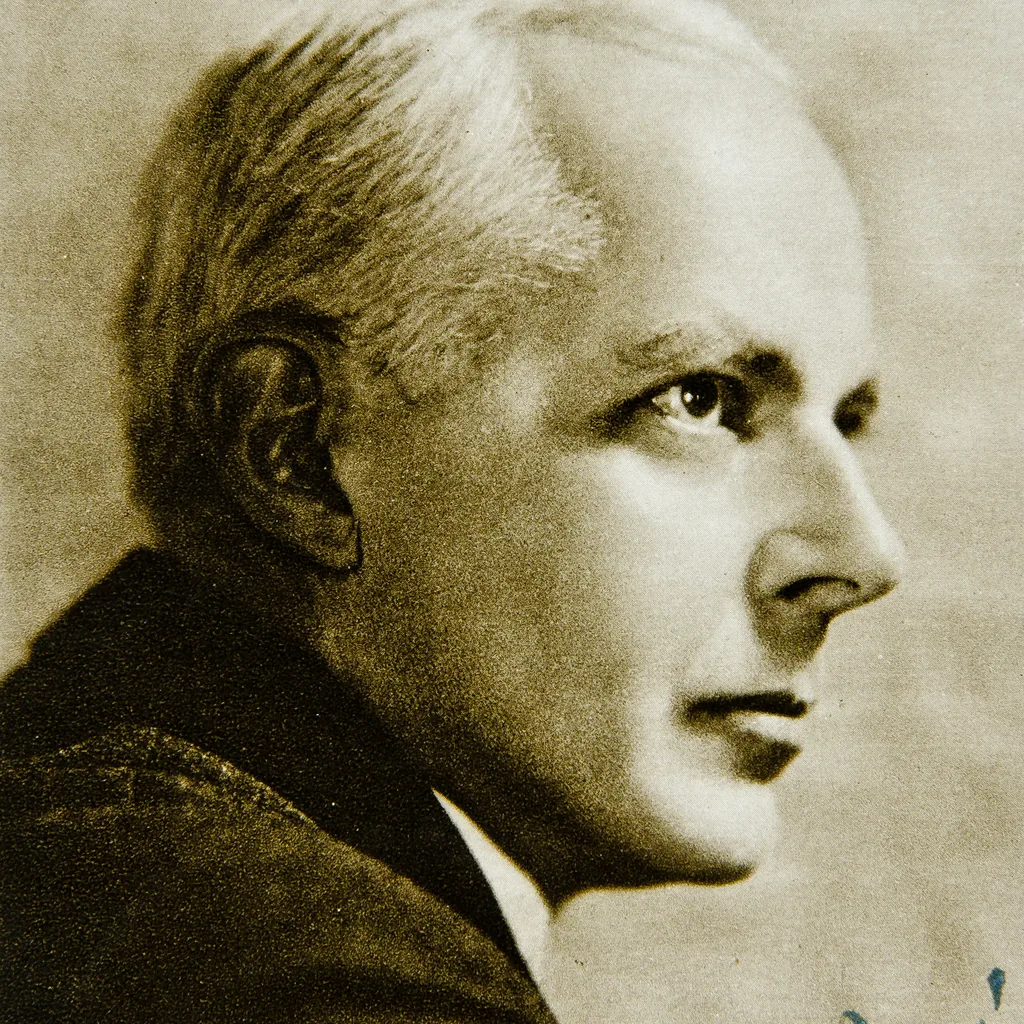
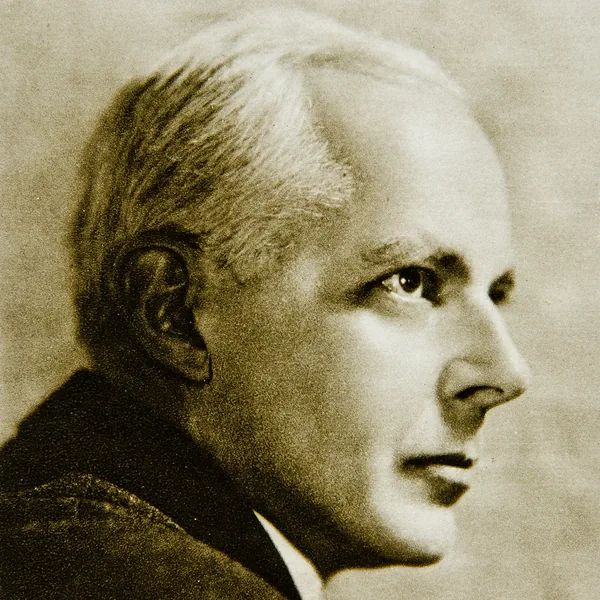
Bartók, born in Nagyszentmiklós in the Kingdom of Hungary, began collecting folk melodies with Zoltán Kodály in 1908, recording them on a phonograph. His collecting later reached Slovak, Romanian and Bulgarian material, Algeria in 1913, and Turkish music in 1936. The tunes gave him pentatonic and modal scales. His music is often described as a blend of peasant music and avant-garde technique.
In 1926, his "piano year", he treated the piano as a percussion instrument. Piano Concerto No. 1 asks for timpani and drums to sit right behind the soloist, and Out of Doors imitates drums, pipes and bagpipes. Its fourth piece, The Night's Music, is a clear case of his "night music": quiet, slow, full of nocturnal sounds such as a frog's call, with a chorale and a flute-like tune. Allegro barbaro (1911) sets a largely pentatonic melody over chromatic harmony, with abrupt accents.
Piano Concerto No. 2 (1930 to 1931) has three movements but a fast-slow-fast-slow-fast tempo plan, a symmetrical arch. Bartók wrote it as a contrast to the First, which he thought very difficult for both orchestra and audience. The Sonata for Two Pianos and Percussion (1937) adds timpani, xylophone, drums, cymbals, triangle and tam-tam, and its slow movement is in night-music style. The Concerto for Orchestra (1943, commissioned by the Koussevitzky Foundation after he moved to the United States) treats each orchestral group as a soloist, and its fourth movement quotes a song from Lehár's The Merry Widow.
What to listen for
- Percussive piano: hard, repeated chords and clusters, as in Allegro barbaro and The Chase from Out of Doors.
- Folk-derived melodies built on pentatonic or modal scales, rather than the major and minor of the concert tradition.
- Night music: quiet held sounds with small nocturnal noises scattered across the texture, as in The Night's Music and the slow movements of the Two-Piano Sonata and the Concerto for Orchestra.
- The arch: in Piano Concerto No. 2 the tempo plan mirrors itself, so the last movement answers the first.
- In the Concerto for Orchestra, the second movement pairs instruments, each pair a different interval apart, between side-drum solos at the start and end.
Sources: Béla Bartók (Wikipedia), Concerto for Orchestra (Bartók) (Wikipedia), Out of Doors (Bartók) (Wikipedia), Piano Concerto No. 1 (Bartók) (Wikipedia), Piano Concerto No. 2 (Bartók) (Wikipedia), Sonata for Two Pianos and Percussion (Wikipedia), Allegro barbaro (Bartók) (Wikipedia)