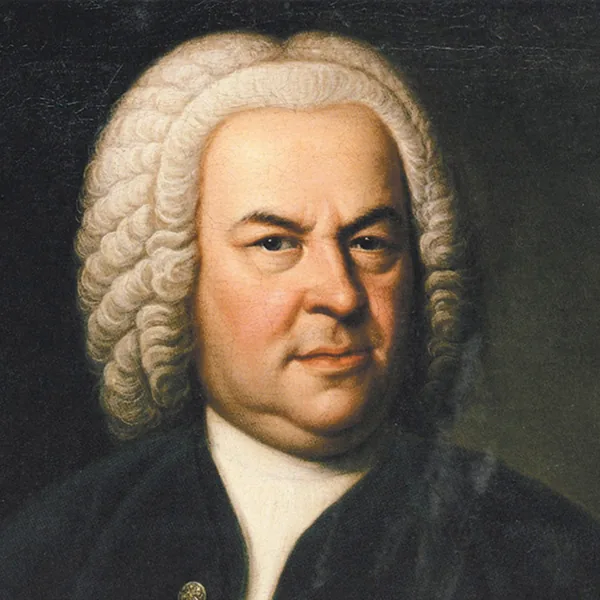
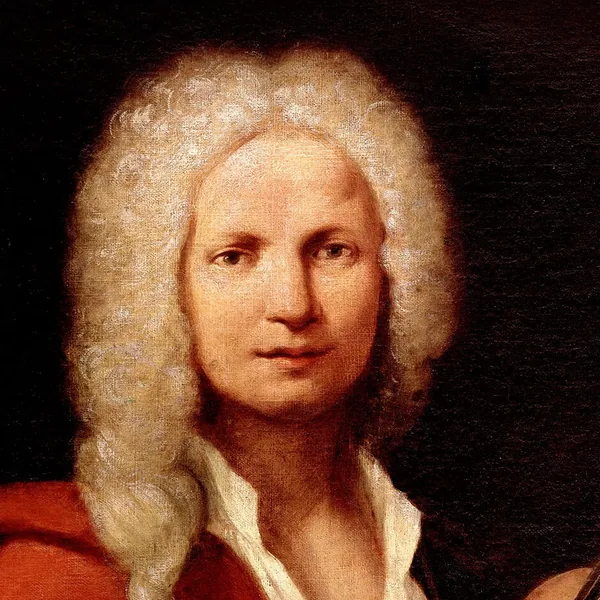
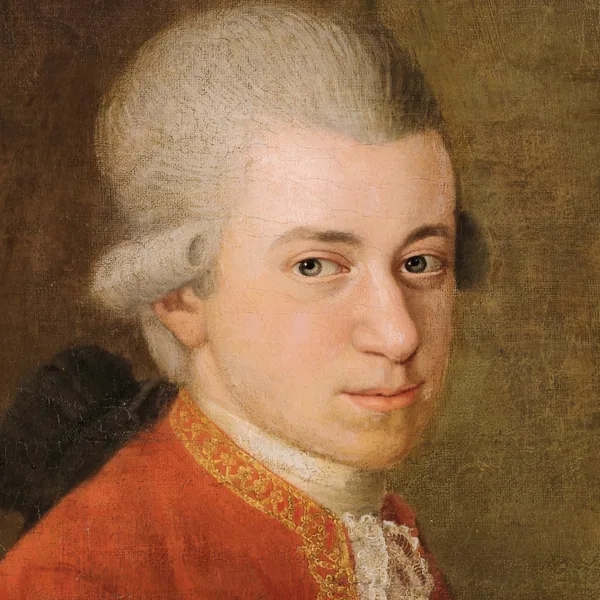
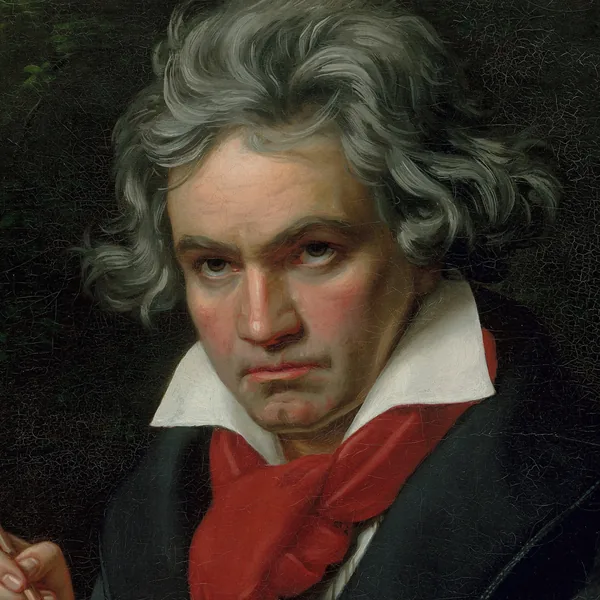
Path 01
Start here
Ten well-known works to learn the map on, each open in full to everyone.
Pachelbel → Bach → Vivaldi → Mozart → Beethoven → Schubert → Chopin → Dvořák → Debussy
1841–1904 · Romantic
18 works
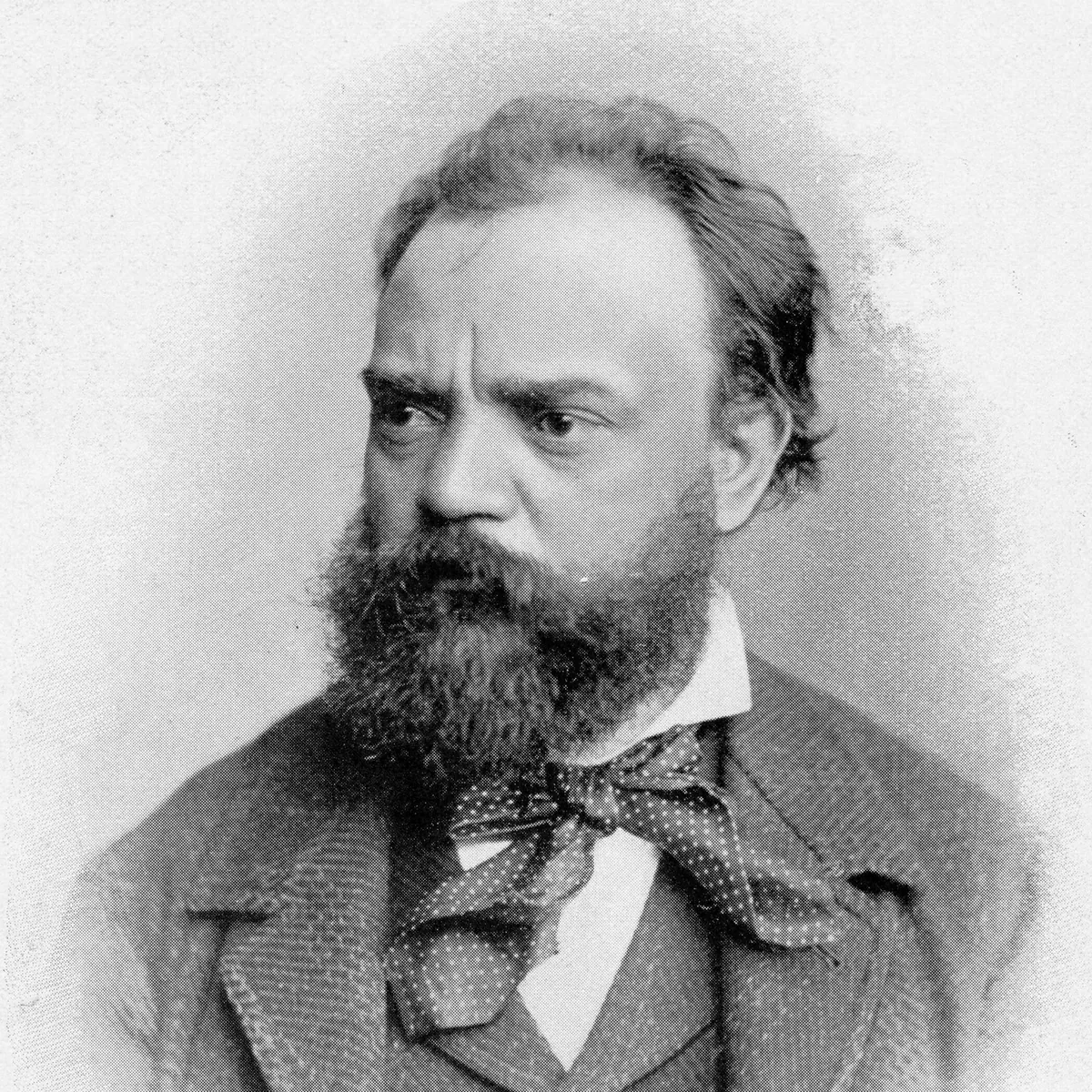
Dvořák was born in Nelahozeves and played viola in Prague's Provisional Theatre orchestra from 1862 until 1871, when he left to compose full-time. Brahms and the critic Eduard Hanslick sat on the jury of the Austrian State Prize, and Brahms recommended him to the publisher Simrock, who commissioned the Slavonic Dances. From 1892 to 1895 he directed the National Conservatory in New York.
He writes in Classical forms with Czech, Moravian and Slavic dance types such as the furiant, dumka and polonaise. A dumka alternates brooding sections with cheerful ones, and the Dumky Trio (1891) is a set of six. The Seventh Symphony (1884 to 1885, for the London Philharmonic Society) is darker and more dramatic. The Eighth (1889) is cheerful, drawn from Bohemian folk music, with a finale of variations that begins with a trumpet fanfare. The Ninth (1893) was written in New York; Dvořák said he wrote original themes with the peculiarities of Native American music and was influenced by spirituals, a link usually traced to the pentatonic scale. Its finale recalls themes from earlier movements.
The Cello Concerto (1894 to 1895) quotes his song "Leave Me Alone" in the slow section of the finale. The Water Goblin (1896) is one of five symphonic poems, four of them from ballads in Erben's Kytice. The Carnival Overture (1891) is the middle part of the Nature, Life and Love trilogy with In Nature's Realm and Othello. The "American" Quartet was composed in 1893 in Spillville, Iowa.
Sources: Antonín Dvořák (Wikipedia), Symphony No. 7 (Dvořák) (Wikipedia), Symphony No. 8 (Dvořák) (Wikipedia), Symphony No. 9 (Dvořák) (Wikipedia), Cello Concerto (Dvořák) (Wikipedia), Piano Trio No. 4 (Dvořák) (Wikipedia), Carnival Overture (Dvořák) (Wikipedia)
 DvořákRomance for Violin and Orchestra in F minor, Op. 11 / B. 39DvořákSerenade for Winds in D minor, Op. 44DvořákMazurek for Violin and Piano in E minor, Op. 49 / B. 89DvořákString Quartet No. 10 in E-flat major, Op. 51DvořákViolin Concerto in A minor, Op. 53DvořákBallade for Violin and Piano in D minor, Op. 15, B. 139DvořákSymphony No. 7 in D minor, Op. 70, B. 141DvořákPiano Quintet No. 2 in A major, Op. 81DvořákSymphony No. 8 in G major, Op. 88DvořákCarnival Overture, Op. 92DvořákPiano Trio No. 4 in E minor, Op. 90DvořákOthello Overture, Op. 93DvořákString Quartet No. 12 in F major, Op. 96 / B. 179DvořákSymphony No. 9 in E minor, Op. 95FreeDvořákHumoresque in G-flat major, Op. 101 No. 7DvořákCello Concerto in B minor, Op. 104 / B. 191DvořákString Quartet No. 14 in A-flat major, Op. 105DvořákThe Water Goblin, Op. 107
Path 01
Ten well-known works to learn the map on, each open in full to everyone.
Pachelbel → Bach → Vivaldi → Mozart → Beethoven → Schubert → Chopin → Dvořák → Debussy
Path 02
Twelve symphonies from Mozart's Fortieth to Shostakovich's Fifth, the core of the concert repertoire.
Mozart → Haydn → Beethoven → Schubert → Berlioz → Mendelssohn → Brahms → Mahler → Tchaikovsky → Dvořák → Shostakovich
Path 08
Four players across almost two centuries: Haydn shapes the conversation, Bartók breaks it open, Shostakovich turns it inward.
Haydn → Mozart → Schubert → Beethoven → Dvořák → Debussy → Reger → Bartók → Shostakovich
Path 09
One work for each kind in the catalog, from the symphony to choral music.
Beethoven → Vivaldi → Debussy → Holst → Dvořák → Mozart → Chopin → Scarlatti → Bach → Schubert → Strauss → Handel
Path 11
Soloist and orchestra across two and a half centuries, from Bach's harpsichord to Rostropovich's cello.
Bach → Vivaldi → Mozart → Beethoven → Mendelssohn → Tchaikovsky → Dvořák → Rachmaninoff → Ravel → Shostakovich
Path 22
Ten violin concertos, from Beethoven's of 1806 to Sibelius's of 1904.
Beethoven → Paganini → Mendelssohn → Wieniawski → Bruch → Lalo → Brahms → Tchaikovsky → Dvořák → Sibelius