
Path 03
Calm classical music
Twelve slow, quiet pieces, from Chopin's lullaby to Pärt's Fratres.
Chopin → Liszt → Wagner → Debussy → Massenet → Fauré → Grainger → Delius → Vaughan Williams → Rachmaninoff → Pärt
1882–1961 · Modern
3 works
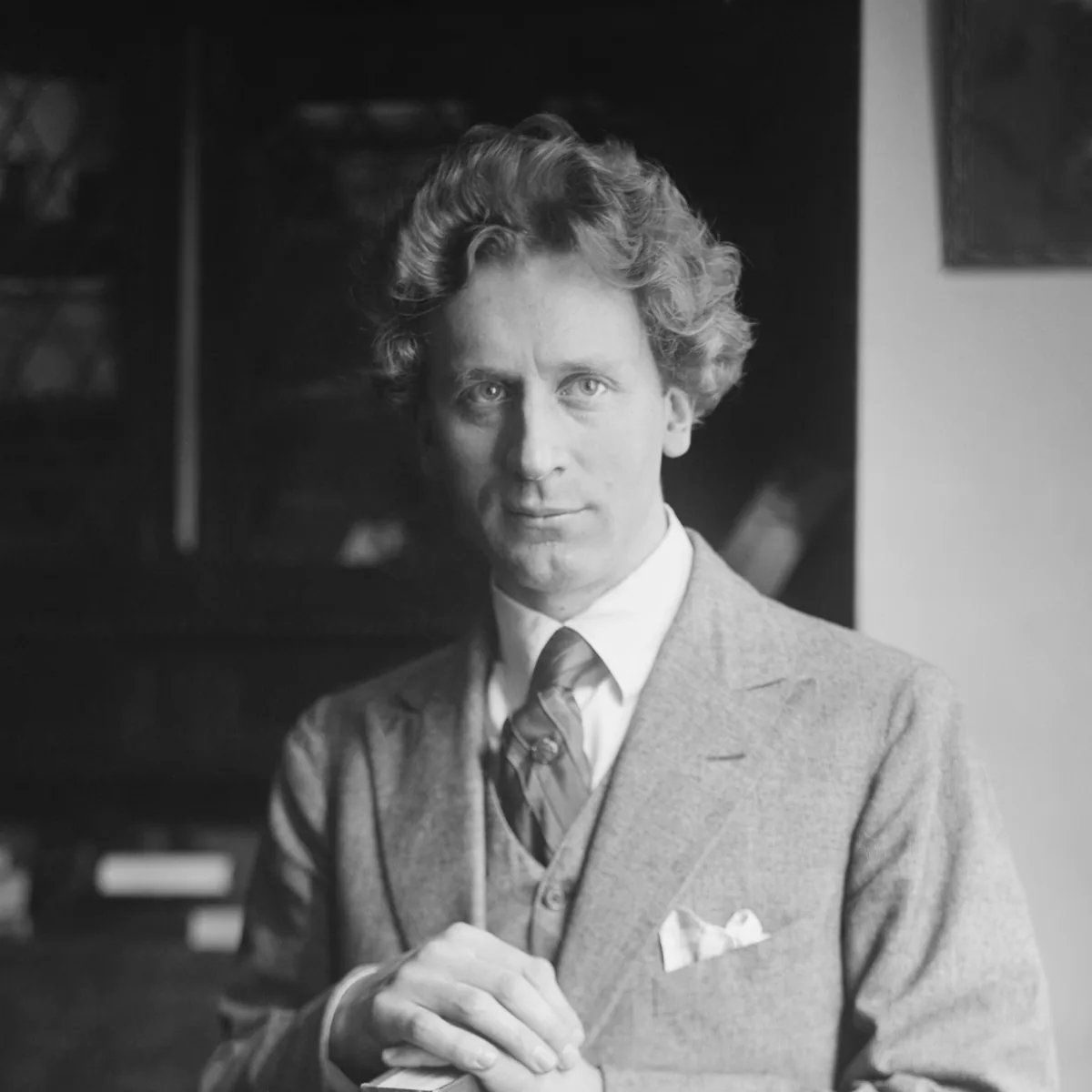
Grainger was born in 1882 in Brighton, Victoria, in Australia. He left at thirteen to study in Frankfurt, lived in London from 1901 to 1914, and then moved to the United States, where he became a citizen in 1918 and died in White Plains, New York, in 1961. In 1905 he began collecting folk songs in Lincolnshire, and from 1906 he used a phonograph, making more than 200 cylinder recordings of singers. Many of his best-known pieces are settings of such tunes, and he kept rewriting them for different forces. From about 1919 he used what he called elastic scoring, which lets a piece be played by a small group or a full orchestra.
The three catalog pieces show that habit. Molly on the Shore (1907) joins two Irish reels, Temple Hill and Molly on the Shore. It began as a birthday gift for his mother, for string quartet or string orchestra, and he later made versions for orchestra (1914), piano (1918) and wind band (1920). The Irish Tune from County Derry uses a melody that Miss J. Ross of Limavady collected and that Petrie printed anonymously in 1855. Grainger's first setting, for wordless unaccompanied chorus, dates from 1902, and others for piano, strings with horns, band and orchestra followed up to 1920.
Colonial Song (1911) is different: its melody is his own, written as a piano piece and given to his mother. He said he wanted a tune as typical of the Australian countryside as Stephen Foster's songs are of rural America. It was later arranged for orchestra, voices and military band.
Sources: Percy Grainger (Wikipedia), Colonial Song (Wikipedia), Molly on the Shore (Wikipedia), List of compositions by Percy Grainger (Wikipedia), A Source Guide to the Music of Percy Grainger (Minerva Classics)
Path 03
Twelve slow, quiet pieces, from Chopin's lullaby to Pärt's Fratres.
Chopin → Liszt → Wagner → Debussy → Massenet → Fauré → Grainger → Delius → Vaughan Williams → Rachmaninoff → Pärt