Path 04
Baroque essentials
Ground bass, ritornello, fugue and dance: the Baroque in twelve works, from Purcell to Bach's Musical Offering.
Purcell → Pachelbel → Bach → Vivaldi → Handel → Scarlatti
1685–1759 · Baroque
3 works
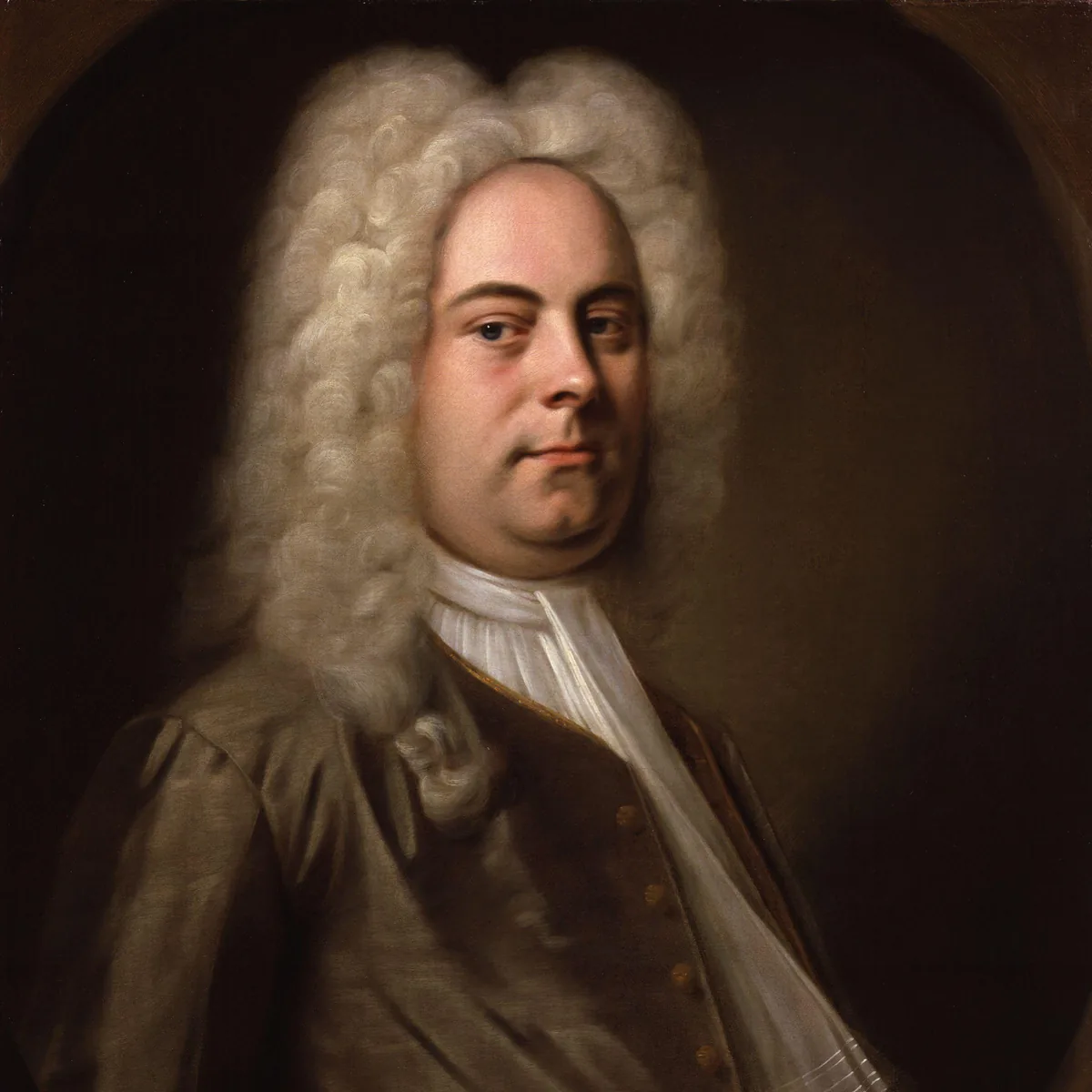
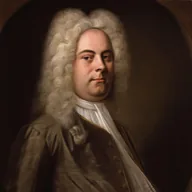
Handel was born in Halle in 1685 and died in London in 1759. He worked in Hamburg from 1703, spent time in Italy from 1706, and settled in London in 1712; he became a British subject in 1727. His music joins two traditions: the German polyphonic choral tradition he grew up in and the Italian Baroque he absorbed abroad. For years he ran opera companies for London's nobility. After a physical breakdown in 1737 he turned to English choral works and shaped the English oratorio, a long sacred piece for soloists, choir and orchestra performed without staging.
Both catalog pieces use the choir with an orchestra that has trumpets and timpani. Zadok the Priest is one of four anthems he wrote for the coronation of George II in 1727, and it has been sung before the anointing at every British coronation since. Its words condense the biblical account of Solomon's anointing (1 Kings 1:34 to 45). It is in D major for choir, strings, two oboes, two bassoons, three trumpets and timpani.
The Hallelujah Chorus ends Part II of Messiah. Handel wrote the whole oratorio in London in 24 days, from 22 August to 14 September 1741, to a text Charles Jennens compiled from the Bible. It was first performed in Dublin on 13 April 1742. Because Messiah uses trumpets sparingly, their entry in the chorus stands out. The story that George II stood during the chorus at the London performance is not backed by good evidence; the earliest mention of standing is a letter of 1756.
Sources: George Frideric Handel (Wikipedia), Zadok the Priest (Wikipedia), Messiah (Handel) (Wikipedia), Hallelujah Chorus (Wikipedia)
Path 04
Ground bass, ritornello, fugue and dance: the Baroque in twelve works, from Purcell to Bach's Musical Offering.
Purcell → Pachelbel → Bach → Vivaldi → Handel → Scarlatti
Path 25
Choirs from Handel's coronation anthem to Ligeti's cloud of voices: masses, requiems and psalms, 1727 to 1966.
Handel → Mozart → Brahms → Verdi → Fauré → Orff → Messiaen → Bernstein → Ligeti
Path 09
One work for each kind in the catalog, from the symphony to choral music.
Beethoven → Vivaldi → Debussy → Holst → Dvořák → Mozart → Chopin → Scarlatti → Bach → Schubert → Strauss → Handel