Path 09
Fifteen kinds of work
One work for each kind in the catalog, from the symphony to choral music.
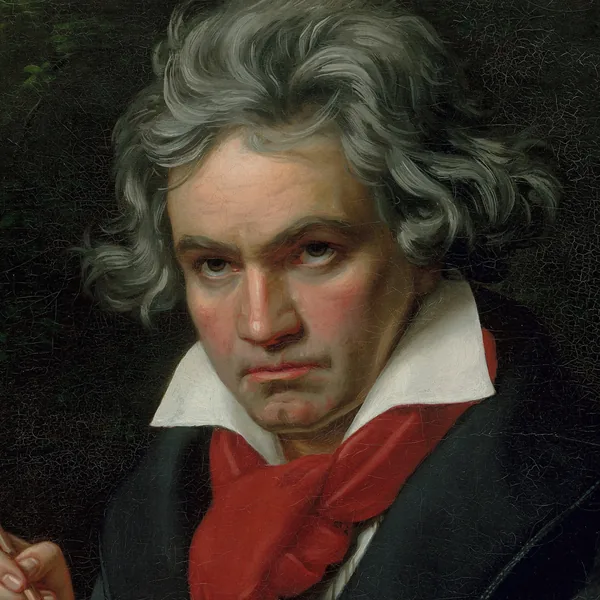
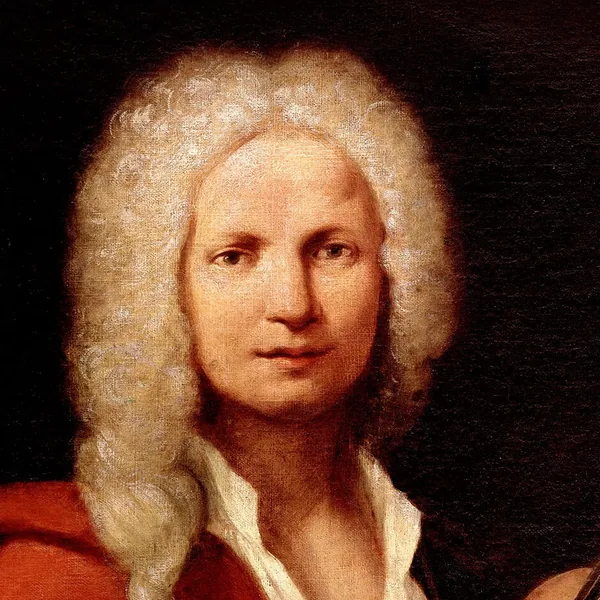
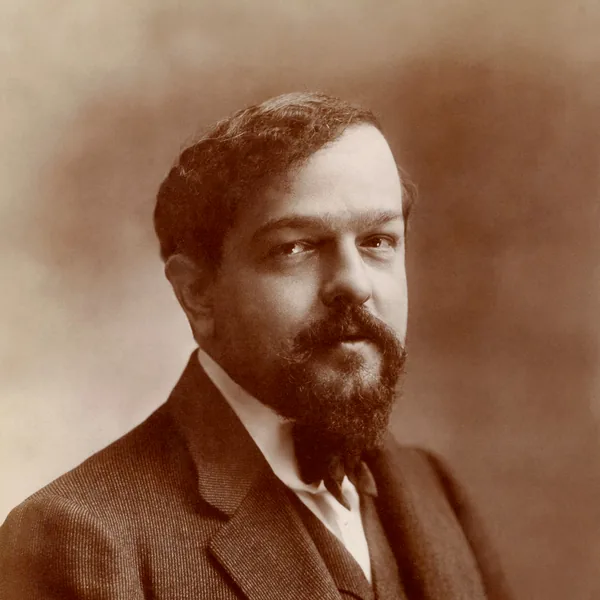
Beethoven → Vivaldi → Debussy → Holst → Dvořák → Mozart → Chopin → Scarlatti → Bach → Schubert → Strauss → Handel
1874–1934 · Modern
2 works

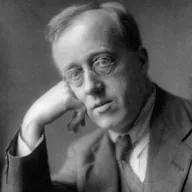
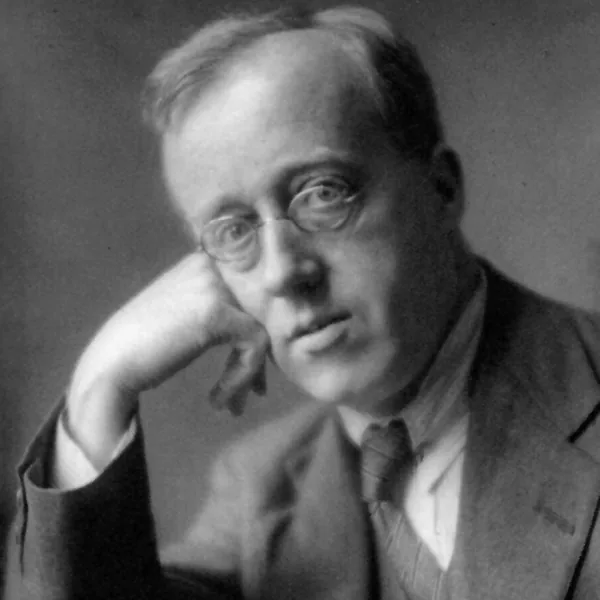
Holst was born in Cheltenham in 1874 and died in London in 1934. He played the trombone professionally while studying at the Royal College of Music with Stanford. He taught at St Paul's Girls' School from 1905 and was director of music at Morley College from 1907 to 1924. Two interests are audible in his music. One is the English folk-song revival, which gave him sweeping modal tunes; his friend Ralph Vaughan Williams was his closest musical influence. The other is the Sanskrit and Hindu texts that he translated himself and studied at University College London from 1909. He also uses ostinato (a short figure repeated under changing music), unusual time signatures, and bitonality, two keys sounding together.
The two catalog works are far apart in size. The First Suite in E-flat for Military Band was finished in 1909 and officially premiered in 1920 at the Royal Military School of Music. Its three movements, Chaconne, Intermezzo and March, are played without a break and all grow from an eight-bar tune of Holst's own that sounds like an English folk song, beginning E-flat, F, C.
The Planets, Op. 32, was composed between 1914 and 1917. Its seven movements are named for planets and their astrological characters, a subject that caught his interest on a 1913 holiday in Spain, and the order was chosen for musical effect, not by distance from the sun. It needs a very large orchestra with organ and celesta, and the last movement adds an offstage women's chorus. The first performance, on 29 September 1918, was private; the first complete public performance came on 15 November 1920.
Sources: Gustav Holst (Wikipedia), The Planets (Wikipedia), First Suite in E-flat for Military Band (Wikipedia)
Path 09
One work for each kind in the catalog, from the symphony to choral music.
Beethoven → Vivaldi → Debussy → Holst → Dvořák → Mozart → Chopin → Scarlatti → Bach → Schubert → Strauss → Handel
Path 27
Twelve directions the century took, from Schoenberg's Verklärte Nacht of 1899 to Piazzolla's tango of 1982.
Schoenberg → Ives → Bartók → Holst → Gershwin → Barber → Prokofiev → Copland → Ligeti → Górecki → Piazzolla