Path 24
Music of the nations
Folk songs, dances and landscapes, from Liszt's Hungary to Márquez's Mexico.
Liszt → Smetana → Grieg → Albéniz → Dvořák → Sibelius → Elgar → Vaughan Williams → Janáček → Villa-Lobos → Rodrigo → Márquez
1950– · Contemporary
1 work

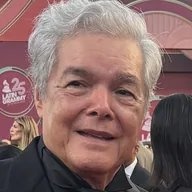
Márquez was born in 1950 in Álamos, in the Mexican state of Sonora. He studied in Mexico, then privately in Paris on a scholarship, and took a master's degree in composition at the California Institute of the Arts in 1990. His orchestral music draws on the forms and styles of Mexico. After he was introduced to Latin ballroom dancing in the 1990s he wrote a series of Danzones, based on music from Veracruz.
The danzón is a dance that began in Cuba and became part of the folklore of Veracruz, Mexico. Danzón No. 2 was written in 1994 on a commission from the Department of Musical Activities of the National Autonomous University of Mexico and dedicated to Lily Márquez. The Orquesta Filarmónica de la UNAM under Francisco Savín gave the first performance in Mexico City in March 1994. It takes about nine and a half minutes. After the Simón Bolívar Youth Orchestra under Gustavo Dudamel played it on its 2007 tour of Europe and the United States, it reached audiences worldwide.
It is mostly in 4/4 with some bars in 6/8 and 7/8, and its rhythmic interest comes from shifting accents and changes of tempo. Many instruments take solo passages: clarinet, oboe, piano, violin, double bass, horn, trumpet, flute and piccolo. The percussion adds dance colour, including claves, güiro, snare drum and three tom-toms.
Sources: Arturo Márquez (Wikipedia), Danzón No. 2 (Wikipedia)
Path 24
Folk songs, dances and landscapes, from Liszt's Hungary to Márquez's Mexico.
Liszt → Smetana → Grieg → Albéniz → Dvořák → Sibelius → Elgar → Vaughan Williams → Janáček → Villa-Lobos → Rodrigo → Márquez