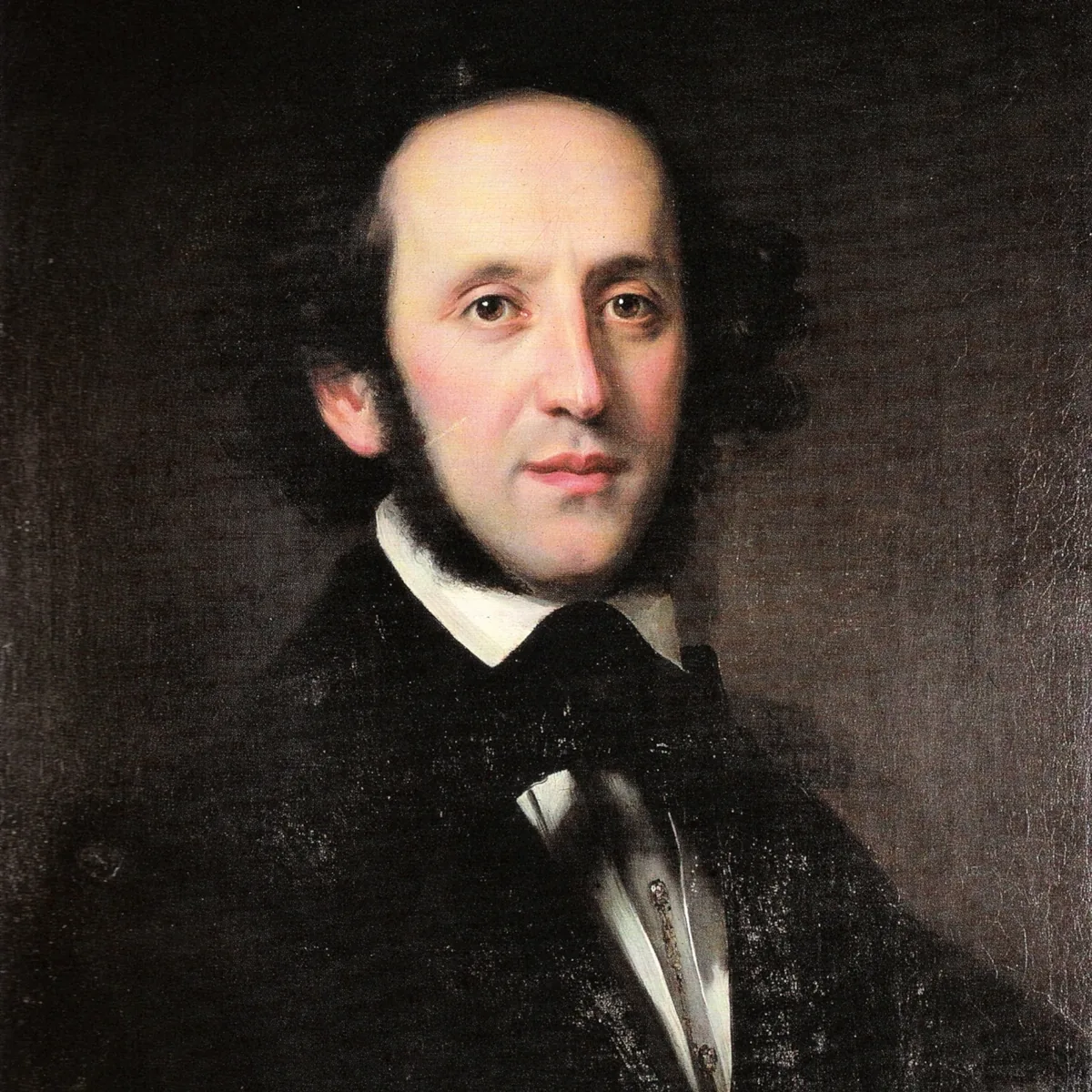
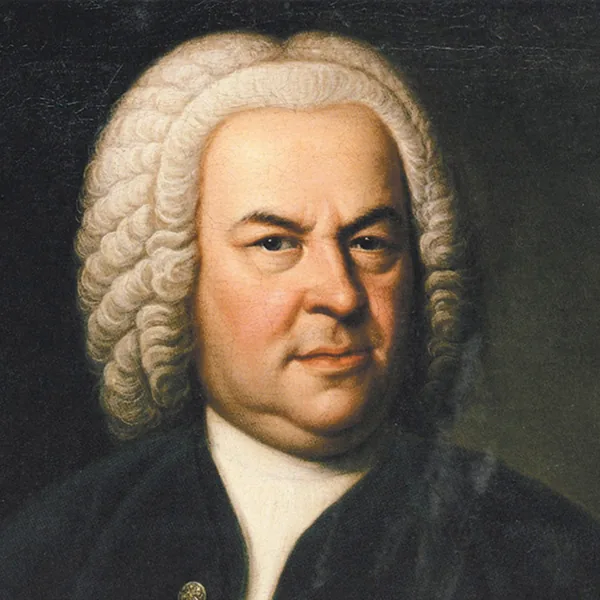
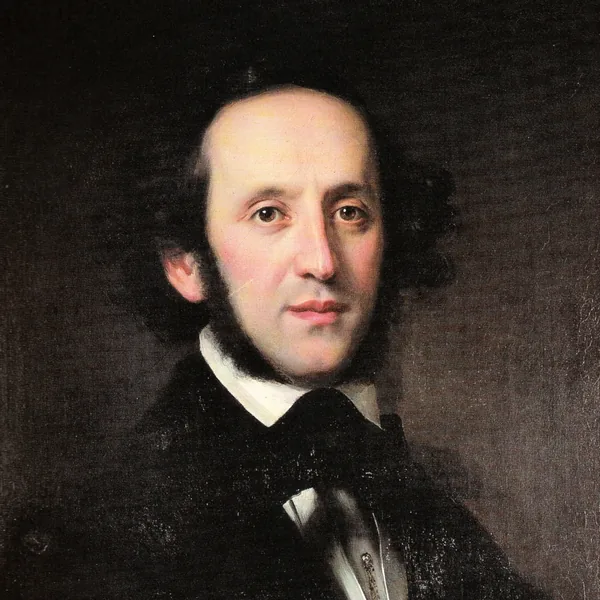
Mendelssohn was born in Hamburg and worked as musical director in Düsseldorf from 1833, then as conductor of the Leipzig Gewandhaus Orchestra from 1835. He kept the Classical forms intact and filled them with Romantic colour. His fugues and chorales show his study of Bach, whose St Matthew Passion he revived in 1829.
The overtures here are concert pieces that paint a scene without a stage. A Midsummer Night's Dream was finished in 1826, when he was 17: four soft wind chords open it and return at the end, and the strings bray for Bottom the donkey. The Hebrides, sketched on Staffa in 1829, opens with a rocking theme for violas, cellos and bassoons, followed by rolling-wave music. Calm Sea and Prosperous Voyage follows two Goethe poems, from a becalmed opening to a trumpet fanfare as the ship reaches port. Athalie opens with a solemn chorale, and Ruy Blas was written for a Hugo play he disliked.
The Violin Concerto (1838 to 1844, for Ferdinand David) has the soloist enter almost at once, links its three movements without a break, and writes out the cadenza before the recapitulation. The Scottish Symphony also runs without pause. The organ sonatas of Op. 65 (1845) use the word sonata in Bach's older sense of a set of varied pieces, with chorales and fugues. The Songs Without Words are short lyrical piano pieces, 48 in eight books.
What to listen for
- In the Midsummer Night's Dream overture, the four soft wind chords at the start, which come back at the very end.
- In The Hebrides, the rocking opening theme in low strings and bassoons, then the rolling-wave second idea.
- In the Violin Concerto, the soloist entering within the first bars and a held bassoon note carrying the music from the first movement into the second.
- In the Scottish Symphony, the second movement's tune built on the pentatonic scale (five notes per octave) with the short-long 'Scotch snap' rhythm, and the broad A major theme near the end of the finale.
- In the organ sonatas, the Lutheran chorale tunes (Sonata No. 3 is based on Aus tiefer Not, No. 6 on Vater unser) and the fugues.
Sources: Felix Mendelssohn (Wikipedia), Hebrides Overture (Wikipedia), Symphony No. 3 (Mendelssohn) (Wikipedia), Violin Concerto (Mendelssohn) (Wikipedia), Organ Sonatas (Mendelssohn) (Wikipedia), Songs Without Words (Wikipedia), A Midsummer Night's Dream (Mendelssohn) (Wikipedia), Calm Sea and Prosperous Voyage (Mendelssohn) (Wikipedia), String Quartet No. 6 (Mendelssohn) (Wikipedia), Ruy Blas Overture Op. 95 (Barenreiter), Mendelssohn's Athalie Overture (The Listeners Club)