Path 25
Choral masterpieces
Choirs from Handel's coronation anthem to Ligeti's cloud of voices: masses, requiems and psalms, 1727 to 1966.
Handel → Mozart → Brahms → Verdi → Fauré → Orff → Messiaen → Bernstein → Ligeti
1895–1982 · Modern
1 work
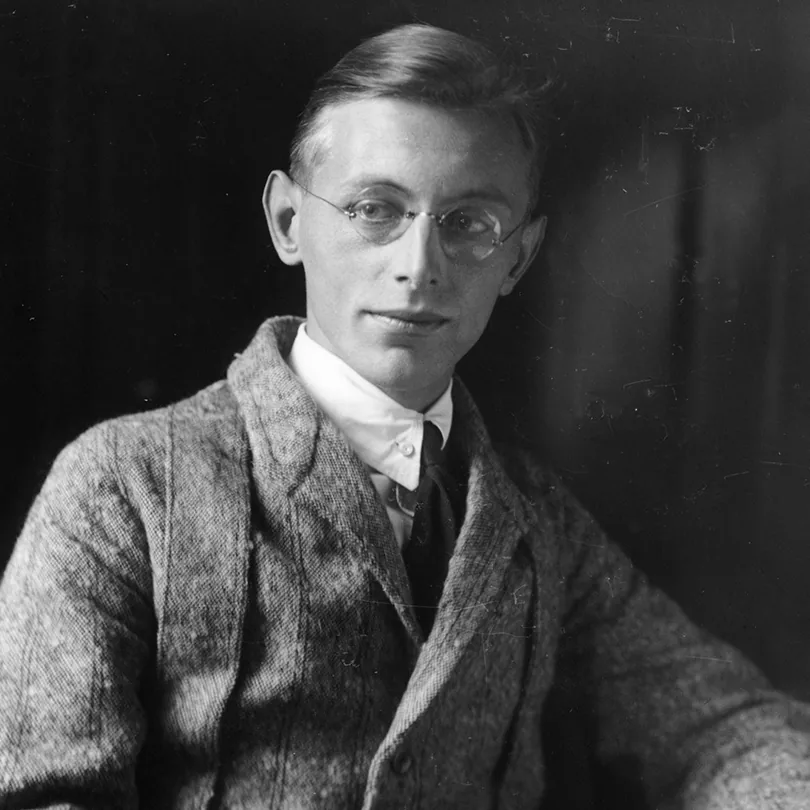
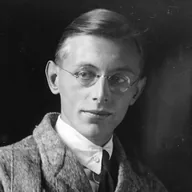
Orff was born and died in Munich, and Munich was his base. In 1924 he co-founded the Günther-Schule there with Dorothee Günther. With Gunild Keetman he developed the Orff Schulwerk, a way of teaching music through elementary instruments and simple, movement-based music. His ideal was elemental music, which joins music, dance, poetry and theatre.
His style is earthy and folk-like, and Stravinsky's Les noces was an influence. Rhythm comes first, with the metre changing freely. There is little development or polyphony, and the harmony avoids obvious complexity. Reviewers describe hard, metallic sounds, primitive ostinatos (patterns repeated again and again) and large percussion and mallet ensembles, with voices that mostly declaim rather than sing arias. He also set ancient Greek texts in Antigonae (1949), Oedipus der Tyrann (1959) and Prometheus (1968).
Carmina Burana was composed in 1935 and 1936 as a scenic cantata for voices and large orchestra and was first performed by the Oper Frankfurt on 8 June 1937. It sets medieval poems from a manuscript found at Benediktbeuern in 1803, written in Latin and early German. O Fortuna, whose title in the cantata is Fortuna Imperatrix Mundi (Fortune, Empress of the World), is the first movement and returns as the last, so it forms a frame around the whole work. The image behind it is the turning Wheel of Fortune, and the poems often turn from joy to bitterness.
Sources: Carl Orff (Wikipedia), Carmina Burana (Orff) (Wikipedia)
Path 25
Choirs from Handel's coronation anthem to Ligeti's cloud of voices: masses, requiems and psalms, 1727 to 1966.
Handel → Mozart → Brahms → Verdi → Fauré → Orff → Messiaen → Bernstein → Ligeti