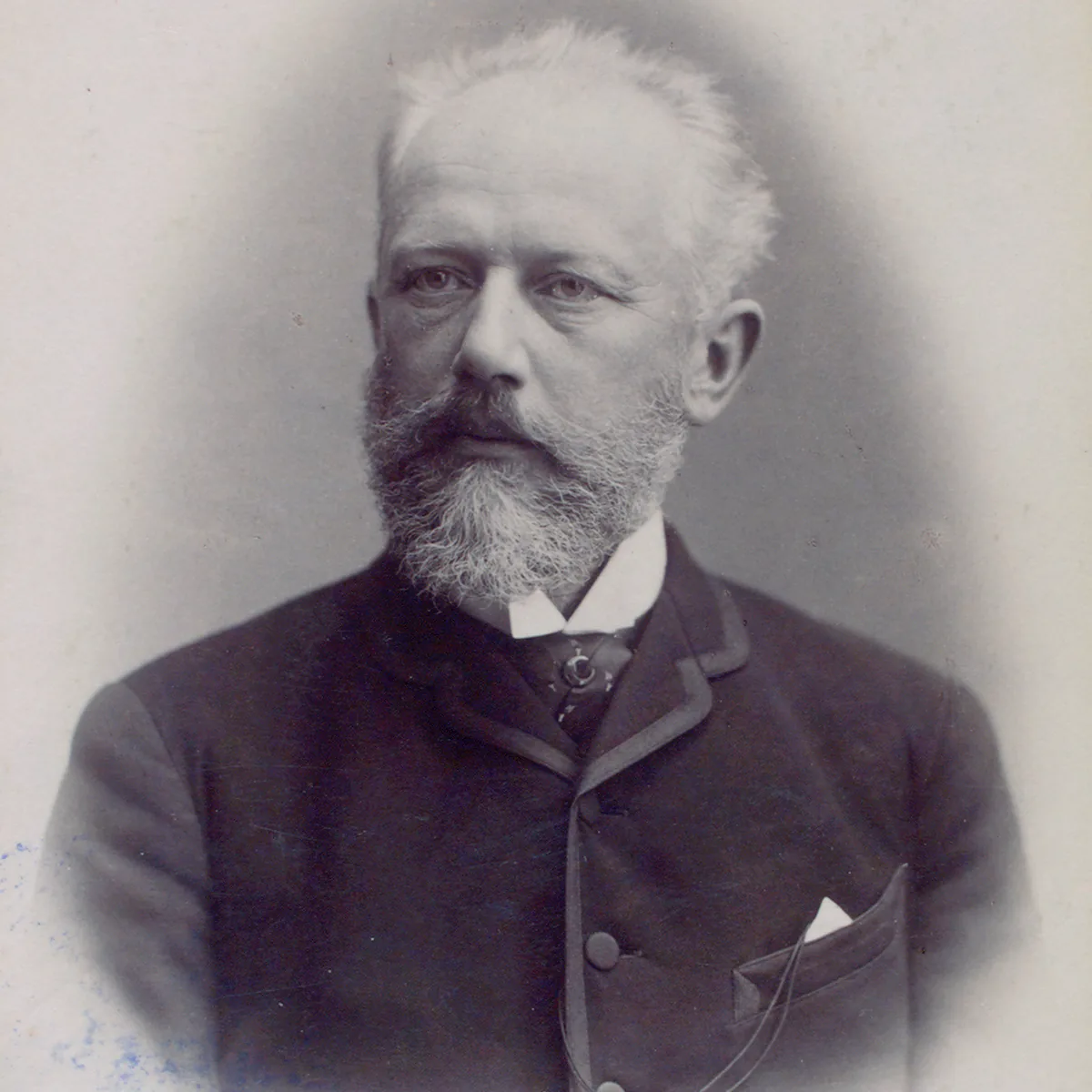
Tchaikovsky was born in Votkinsk and graduated from the Saint Petersburg Conservatory in 1865. He taught at the Moscow Conservatory until 1878, after which Nadezhda von Meck supported him for thirteen years so that he could compose. His Western training set him apart from the nationalist group called The Five, yet his themes range from Western-style lines to Russian folk-style tunes and real folk songs. The Second Symphony (Little Russian) uses Ukrainian songs, including The Crane in the finale; the main theme of the First Piano Concerto's Allegro is a melody he heard from blind lyre players near Kyiv. Dance rhythms, the waltz in particular, run through his symphonies.
Several works tell a story or follow a play: the Romeo and Juliet fantasy-overture (suggested by Balakirev in 1869), The Tempest, Hamlet and the 1812 Overture, with its cannon and bells. Others use a recurring idea: the "fate" fanfare of the Fourth Symphony, and the motto that appears in all four movements of the Fifth.
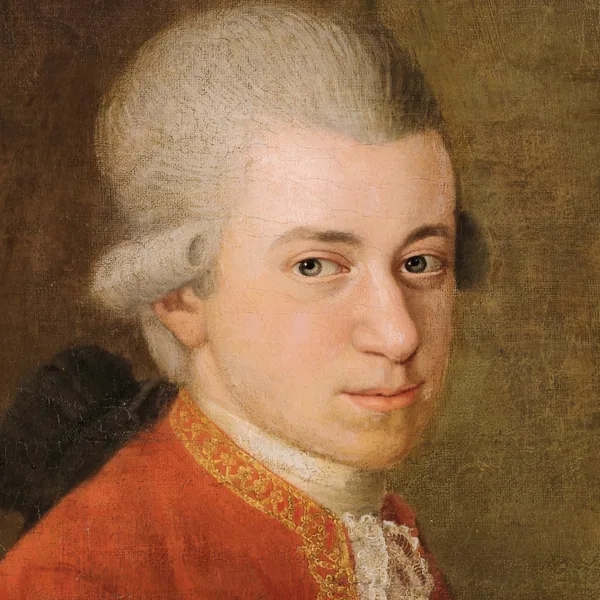
The catalog also holds a Mozart-inspired side: the Serenade for Strings, whose first movement imitates Mozart, and the Rococo Variations for cello and a reduced orchestra. The Violin Concerto, the Souvenir de Florence sextet, the Nutcracker Suite, the piano pieces The Seasons and Dumka, and the Sixth Symphony of 1893 complete the picture.
What to listen for
- A recurring "fate" idea: the brass fanfare of the Fourth Symphony, and the motto of the Fifth that begins like a funeral march and ends as a triumphant march in E major.
- In the Sixth Symphony, a waltz in 5/4, a march-like scherzo, and a slow finale that fades away; the finale's main theme is shared between first and second violins.
- Folk tunes: the Ukrainian melody in the Piano Concerto No. 1, The Crane in Symphony No. 2, and In the Field Stood a Birch Tree in the finale of Symphony No. 4.
- In Romeo and Juliet, a chorale for Friar Laurence, agitated sword-fight music, and a love theme in which the English horn and viola stand for Romeo and the flutes for Juliet.
- In Rococo Variations and the Serenade for Strings, an elegant, Classical-sized sound: no trumpets or percussion in the variations, and strings only in the serenade.
Sources: Pyotr Ilyich Tchaikovsky (Wikipedia), Symphony No. 6 (Tchaikovsky) (Wikipedia), Symphony No. 5 (Tchaikovsky) (Wikipedia), Symphony No. 4 (Tchaikovsky) (Wikipedia), Symphony No. 2 (Tchaikovsky) (Wikipedia), Piano Concerto No. 1 (Tchaikovsky) (Wikipedia), Romeo and Juliet (Tchaikovsky) (Wikipedia), 1812 Overture (Wikipedia), Serenade for Strings (Tchaikovsky) (Wikipedia), Variations on a Rococo Theme (Wikipedia)