Path 25
Choral masterpieces
Choirs from Handel's coronation anthem to Ligeti's cloud of voices: masses, requiems and psalms, 1727 to 1966.
Handel → Mozart → Brahms → Verdi → Fauré → Orff → Messiaen → Bernstein → Ligeti
1813–1901 · Romantic
3 works
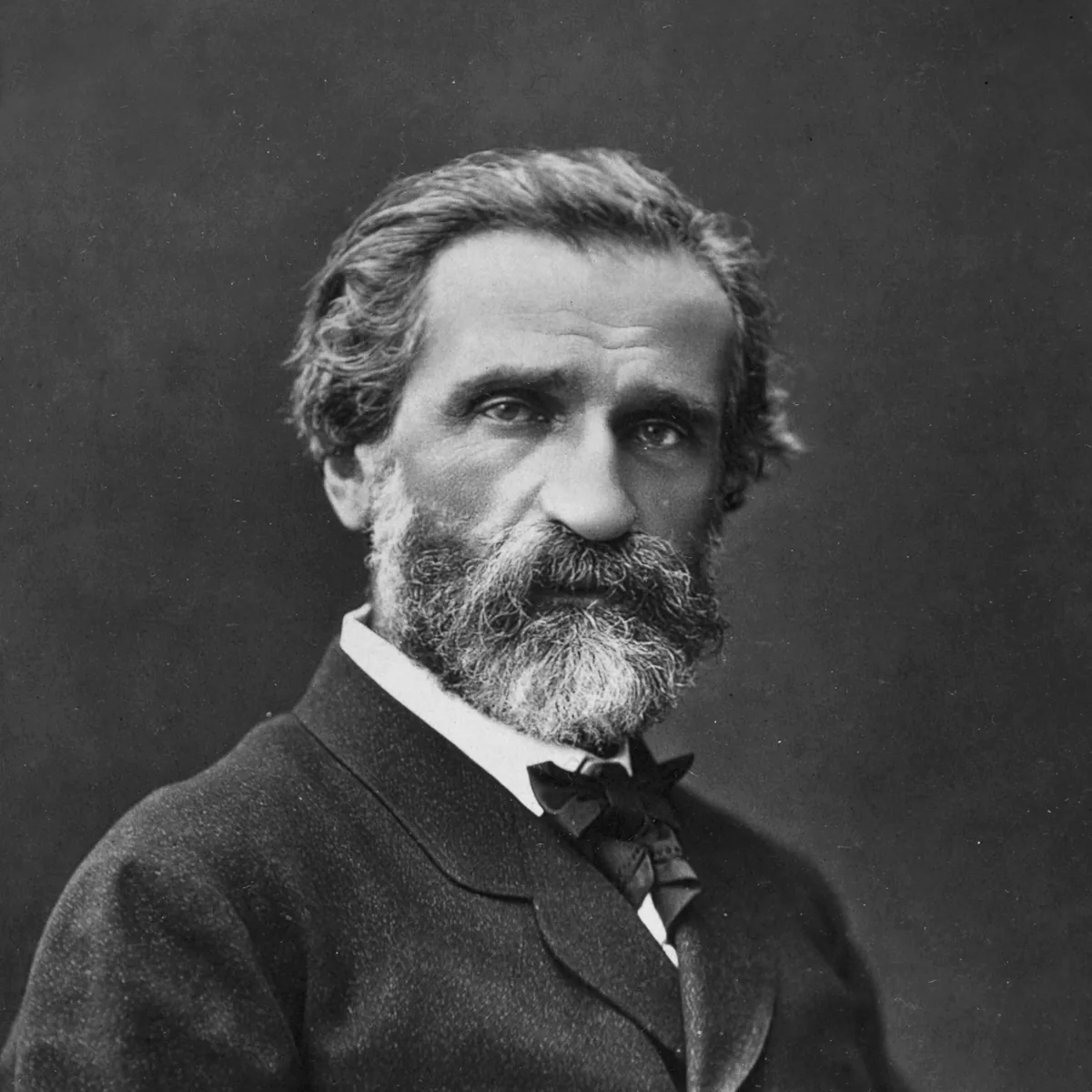
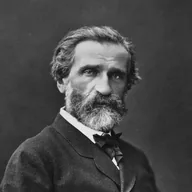
Verdi was born near Busseto in northern Italy and died in Milan. He wrote for the opera house, and his career runs from the success of Nabucco (1842) to Falstaff (1893). He inherited from Rossini the fixed forms of Italian opera: the aria with a slow opening and a fast closing cabaletta, the duet, the ensemble, and the act finale ending in a rush (stretto). He developed these forms with growing sophistication, and his later orchestration became more colourful under the influence of French grand opera.
La traviata (1853) belongs to his middle period, with Rigoletto and Il trovatore. Francesco Maria Piave wrote the libretto after Dumas fils's play La Dame aux camélias. The opera failed at its La Fenice premiere in Venice in March 1853 and succeeded in later productions. Waltz rhythms run through the score, and the heroine's death from illness is pictured in the music. In his middle period Verdi increasingly replaced full overtures with shorter orchestral introductions, and La traviata opens with one.
The prelude opens with very soft, very high strings, a portrait of the frail Violetta. The love theme follows in the lower strings while higher instruments decorate its melody. The prelude to Act III returns to this music, setting the scene for Violetta's final illness.
Sources: Giuseppe Verdi (Wikipedia), La traviata (Wikipedia), Opera Club #1.3: La Traviata, Prelude and Opening (tleaves.com), La Traviata: Act III, Preludio (Kalmus score description)
Path 25
Choirs from Handel's coronation anthem to Ligeti's cloud of voices: masses, requiems and psalms, 1727 to 1966.
Handel → Mozart → Brahms → Verdi → Fauré → Orff → Messiaen → Bernstein → Ligeti