Path 28
Bach's Well-Tempered Clavier
A prelude and fugue in every major and minor key: Book I complete, then eleven pairs from Book II.
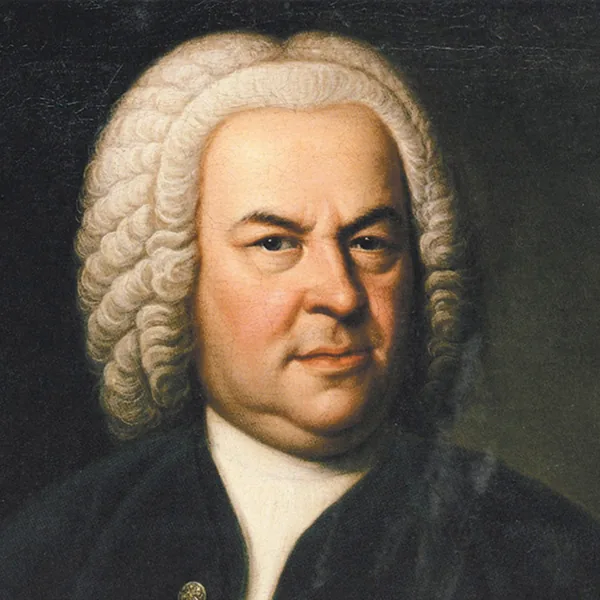
Bach
1685–1750 · Baroque
64 works
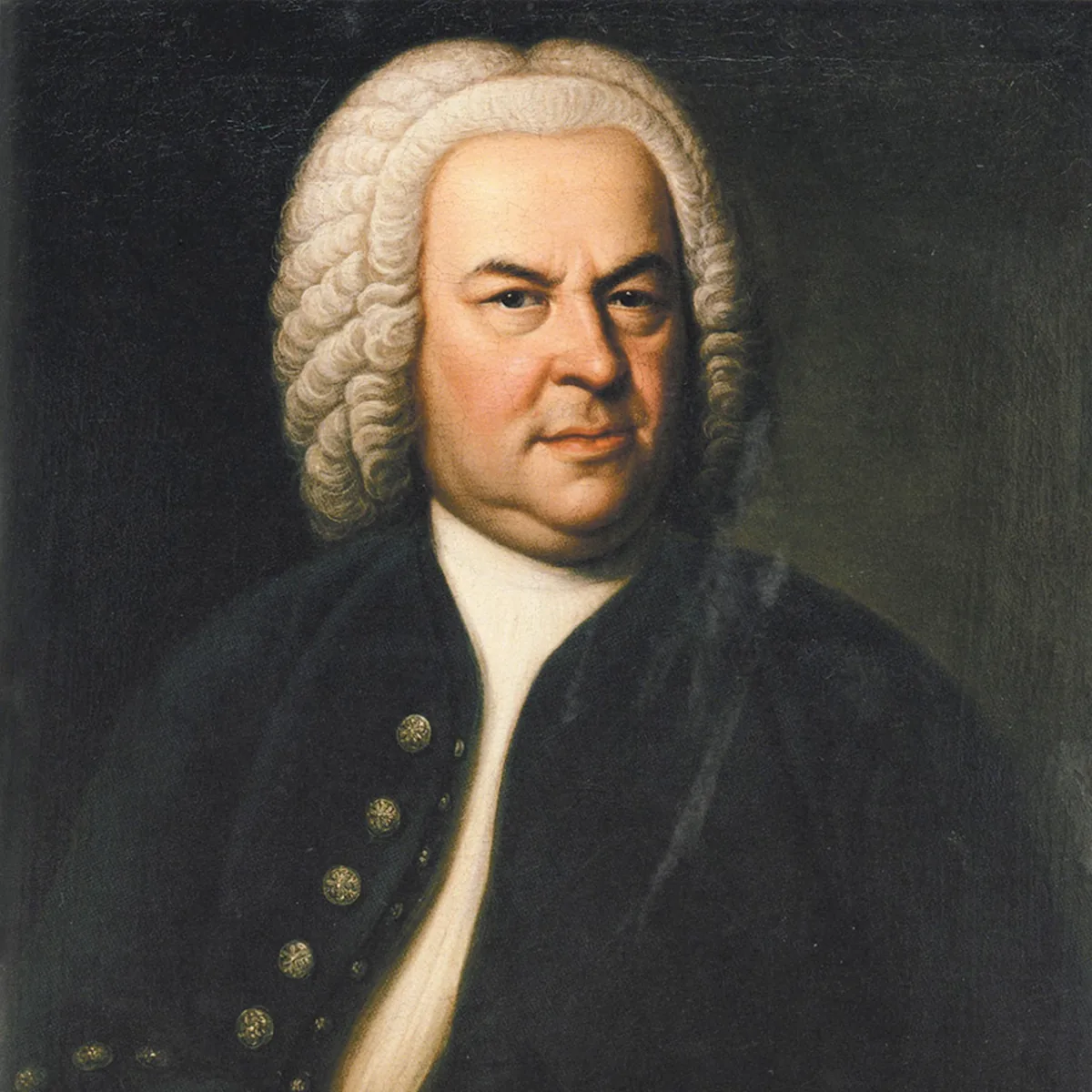
Bach was born in Eisenach and worked as organist and court musician at Arnstadt, Mühlhausen and Weimar, then as Kapellmeister at Köthen from 1717 and as Thomaskantor in Leipzig from 1723. His music is built on counterpoint, with two to five independent lines heard at once and imitated in fugue and canon. He also absorbed Italian and French forms and transcribed Vivaldi's concertos.
The concertos follow the ritornello plan that Vivaldi standardised: the full group plays a recurring passage, which returns in related keys between episodes for the soloists. The six Brandenburg Concertos, presented to the Margrave of Brandenburg in 1721, give each work a different solo group: two horns, oboes and violino piccolo in No. 1; trumpet, recorder, oboe and violin in No. 2; violin and two recorders in No. 4; flute, violin and harpsichord in No. 5; and no violins at all in No. 6. Most of the harpsichord concertos are arrangements of earlier concertos. The Double Concerto, BWV 1043, is dated around 1730 and now placed in Leipzig; its two violins pass fugal imitation between them. The Oboe and Violin Concerto, BWV 1060, is a reconstruction of a lost double concerto.
The keyboard and organ works show his teaching and his craft. The Inventions and Sinfonias are two- and three-part lessons. Each book of the Well-Tempered Clavier pairs 24 preludes and fugues through all keys, Book 1 compiled in 1722 and Book 2 about twenty years later. The Art of Fugue builds on a single D minor subject and was left unfinished. The Ricercar a 6 of The Musical Offering (1747) is a six-voice fugue. The Passacaglia and Fugue in C minor for organ repeats an eight-bar bass while the music above changes.
Sources: Johann Sebastian Bach (Wikipedia), Brandenburg Concertos (Wikipedia), The Well-Tempered Clavier (Wikipedia), Ritornello (Wikipedia), Harpsichord concertos (Bach) (Wikipedia), Concerto for Two Violins (Bach) (Wikipedia), Inventions and Sinfonias (Bach) (Wikipedia), The Art of Fugue (Wikipedia), The Musical Offering (Wikipedia), Passacaglia and Fugue in C minor, BWV 582 (Wikipedia)
 BachToccata and Fugue in D minor, BWV 565BachPassacaglia and Fugue in C minor, BWV 582FreeBachFantasia and Fugue in C minor, BWV 537BachBrandenburg Concerto No. 2 in F major, BWV 1047BachBrandenburg Concerto No. 6 in B-flat major, BWV 1051BachBrandenburg Concerto No. 4 in G major, BWV 1049BachChromatic Fantasia and Fugue in D minor, BWV 903BachBrandenburg Concerto No. 1 in F major, BWV 1046BachBrandenburg Concerto No. 5 in D major, BWV 1050FreeBachThe Well-Tempered Clavier, Book I, BWV 846-869BachCello Suite No. 1 in G major, BWV 1007BachSinfonia No. 1 in C major, BWV 787BachSinfonia No. 3 in D major, BWV 789BachSinfonia No. 6 in E major, BWV 792BachSinfonia No. 7 in E minor, BWV 793BachSinfonia No. 8 in F major, BWV 794BachSinfonia No. 13 in A minor, BWV 799BachSinfonia No. 14 in B♭ major, BWV 800BachSinfonia No. 15 in B minor, BWV 801BachTwo-Part Invention No. 1 in C major, BWV 772BachTwo-Part Invention No. 3 in D major, BWV 774BachTwo-Part Invention No. 4 in D minor, BWV 775BachTwo-Part Invention No. 5 in E♭ major, BWV 776BachTwo-Part Invention No. 7 in E minor, BWV 778BachTwo-Part Invention No. 8 in F major, BWV 779BachTwo-Part Invention No. 12 in A major, BWV 783BachTwo-Part Invention No. 14 in B♭ major, BWV 785BachTwo-Part Invention No. 15 in B minor, BWV 786BachViolin Concerto in A minor, BWV 1041BachPrelude and Fugue No. 1 in C major (WTC II), BWV 870BachConcerto for Two Violins in D minor, BWV 1043BachTrio Sonata No. 1 in E-flat major, BWV 525BachPrelude and Fugue in B minor, BWV 544BachFlute Sonata in E-flat major, BWV 1031BachItalian Concerto in F major, BWV 971BachConcerto for Oboe and Violin in C minor, BWV 1060RBachHarpsichord Concerto No. 1 in D minor, BWV 1052BachHarpsichord Concerto No. 3 in D major, BWV 1054BachHarpsichord Concerto No. 5 in F minor, BWV 1056BachFugue in C minor (WTC 2 No. 2), BWV 871BachFugue in E minor (WTC 2 No. 10), BWV 879BachFugue in G major (WTC 2 No. 15), BWV 884BachPrelude and Fugue No. 9 in E major (WTC II), BWV 878BachPrelude and Fugue No. 11 in F major (WTC II), BWV 880BachPrelude and Fugue No. 14 in F-sharp minor (WTC II), BWV 883BachPrelude and Fugue No. 16 in G minor (WTC II), BWV 885BachPrelude in D minor (WTC II No. 6), BWV 875BachPrelude in E♭ major (WTC II No. 7), BWV 876BachFugue in A minor (WTC 2 No. 20), BWV 889BachFugue in D♯ minor (WTC 2 No. 8), BWV 877BachFugue in G♯ minor (WTC 2 No. 18), BWV 887BachPrelude and Fugue No. 3 in C-sharp major (WTC II), BWV 872BachPrelude and Fugue No. 13 in F-sharp major (WTC II), BWV 882BachPrelude and Fugue No. 17 in A-flat major (WTC II), BWV 886BachPrelude and Fugue No. 21 in B-flat major (WTC II), BWV 890BachPrelude and Fugue No. 23 in B major (WTC II), BWV 892BachPrelude in A major (WTC II No. 19), BWV 888BachFugue in F minor (WTC 2 No. 12), BWV 881BachPrelude and Fugue No. 4 in C-sharp minor (WTC II), BWV 873BachPrelude and Fugue No. 5 in D major (WTC II), BWV 874BachPrelude and Fugue No. 22 in B-flat minor (WTC II), BWV 891BachPrelude and Fugue No. 24 in B minor (WTC II), BWV 893BachThe Art of Fugue, BWV 1080: Contrapunctus 1-4BachThe Musical Offering, BWV 1079: Ricercar a 6
Path 28
A prelude and fugue in every major and minor key: Book I complete, then eleven pairs from Book II.
Bach
Path 04
Ground bass, ritornello, fugue and dance: the Baroque in twelve works, from Purcell to Bach's Musical Offering.
Purcell → Pachelbel → Bach → Vivaldi → Handel → Scarlatti
Path 14
Two ways of making much from little: a theme changed again and again, and a subject passed from voice to voice.
Bach → Mozart → Haydn → Beethoven → Mendelssohn → Brahms → Elgar
Path 01
Ten well-known works to learn the map on, each open in full to everyone.
Pachelbel → Bach → Vivaldi → Mozart → Beethoven → Schubert → Chopin → Dvořák → Debussy
Path 07
Short, complete works for a single sitting.
Bach → Mozart → Haydn → Beethoven → Schubert → Mendelssohn → Saint-Saëns → Sibelius → Ravel → Debussy → Gershwin → Copland
Path 09
One work for each kind in the catalog, from the symphony to choral music.
Beethoven → Vivaldi → Debussy → Holst → Dvořák → Mozart → Chopin → Scarlatti → Bach → Schubert → Strauss → Handel