Path 23
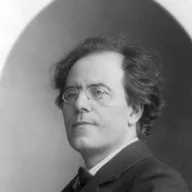
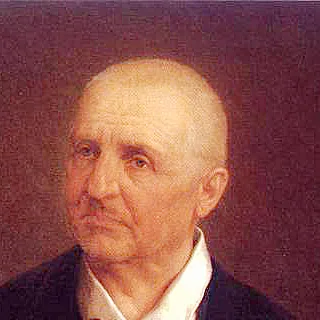
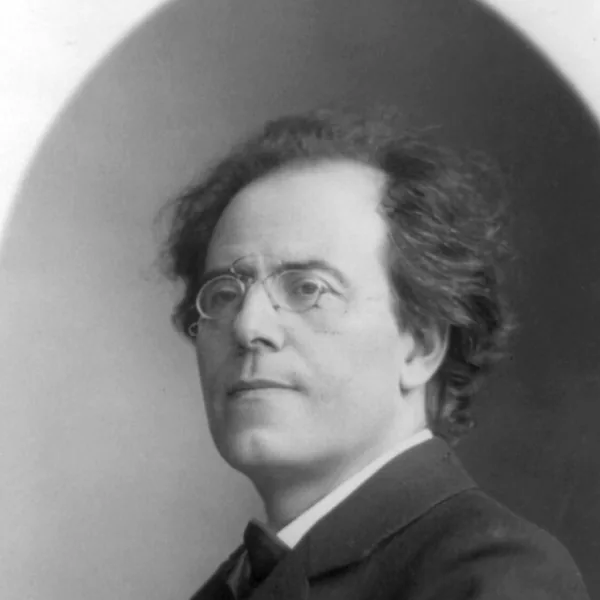
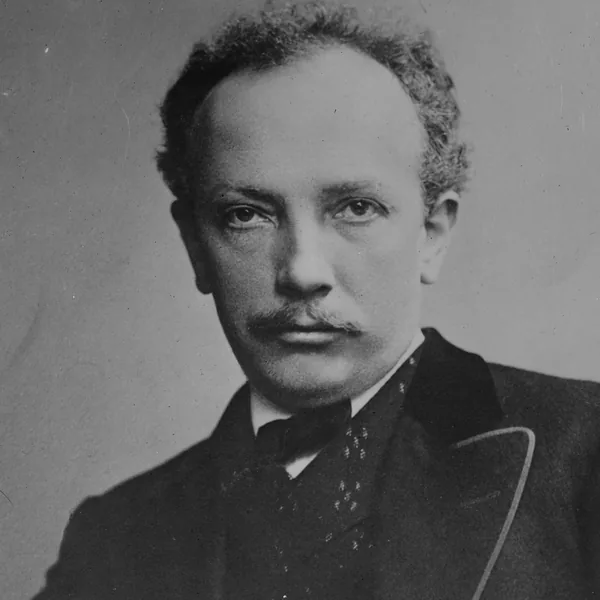
Mahler, Bruckner and Strauss
The late Romantic orchestra at its largest: Bruckner's and Mahler's symphonies and Strauss's tone poems, 1880 to 1945.
Bruckner → Mahler → Strauss
This guide follows Mahler’s Symphony No. 5 in C-sharp minor (1902) in five parts: Trauermarsch, Sturmisch bewegt (sonata form), Scherzo: Kräftig, nicht zu schnell (minuet and trio), Adagietto and Rondo-Finale (rondo).
Premium
Follow all 50 sections as they play, free for 3 days
Marked 'in measured step, stern, like a funeral procession'. A trumpet , its rhythm to Beethoven's Fifth, starts the C-sharp minor (section A). The keeps returning, as A1, A2, A3, A4 and A5, and each contrasting music breaks into it: a wild outburst in one , a quieter, passage in another. New material starts with sections B, C and D. The dies away quietly, with the .
Section boundaries in music are not always sharp; a transition may be felt over a pause or a held chord.
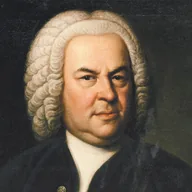 BachTrio Sonata No. 1 in E-flat major, BWV 525
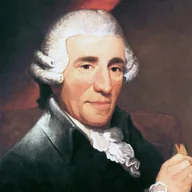 HaydnSymphony No. 1 in D major, Hob. I:1HaydnHorn Concerto in D major, Hob. VIId:3HaydnPiano Sonata in A-flat major, Hob. XVI:46HaydnPiano Sonata in C minor, Hob. XVI:20HaydnString Quartet in A major, Op. 20 No. 6HaydnString Quartet in C major, Op. 20 No. 2HaydnString Quartet in D major, Op. 20 No. 4HaydnString Quartet in E-flat major, Op. 20 No. 1HaydnString Quartet in F minor, Op. 20 No. 5
Path 23
The late Romantic orchestra at its largest: Bruckner's and Mahler's symphonies and Strauss's tone poems, 1880 to 1945.
Bruckner → Mahler → Strauss
Reviews